 Everstood
Calendly teardown: 39.11M visits a month for the scheduling link that became the default
Monthly visits
39.11M
Semrush, October 2026. Third-party estimate, not official MAU/DAU.
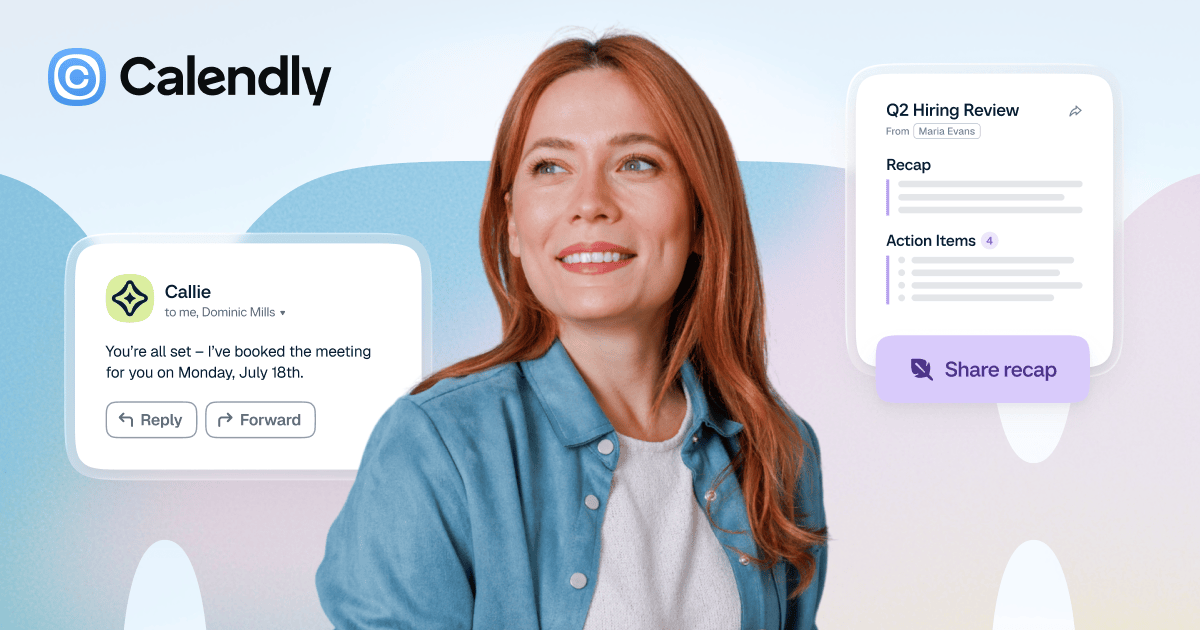
Calendly is an online scheduling tool that Semrush credits with 39.11M visits in October 2026. That makes it the eighteenth largest site in our database, just below iLoveIMG at 40.22M and just above ClickUp at 36.99M, and the first scheduling tool we have torn down: Cal.com (3.6M) is the other scheduling tool in the database, not torn down yet, and it opens our thirteenth teardown vertical. The story is not a quiet bootstrap. Calendly was founded in Atlanta in 2013 by Tope Awotona, a former EMC salesperson who was frustrated scheduling sales calls, was self-funded from savings and a small-business loan, raised $350 million in January 2021 at a $3 billion valuation, and went all-remote in July 2021. The homepage still sells it the same way it always has: send a link, and the meeting books itself.
| Site | Calendly, calendly.com |
|---|---|
| What it is | Online scheduling tool: booking pages, calendar sync, automated reminders, routing forms, meeting notes (Notetaker), AI scheduling assistant (Callie) and payments at booking |
| Who it is for | People whose work runs on meetings: sales, recruiting, customer success, coaching and consulting, and any team that books time with people outside the company |
| Category | Scheduling tools |
| Monthly visits | 39.11M, Semrush, October 2026. Third-party estimate, not official MAU/DAU |
| Pricing | Free $0; Standard $12/seat/month (monthly billing) or $10/seat/month billed annually; Teams $20/seat/month or $16/seat/month billed annually; Enterprise from $15,000/year (50 seats minimum); Standard Plus $24/month or $18/month billed annually and Teams Plus $32/month or $24/month billed annually, both adding Notetaker and Callie. 14-day free trial on paid plans, which ends by downgrading to Free. Source: calendly.com/pricing, prices recorded by live browser 16 November 2026 and held in the master table; a text fetch on the same day confirmed the annual prices ($10 Standard, $16 Teams, $15,000 Enterprise) and the 14-day trial. Prices in USD; Enterprise is available in USD only |
| Pricing model | Freemium subscription, priced per seat. The free tier allows one event type on one calendar. Paid tiers add event types, calendars, team scheduling and lead routing. The Plus tiers add the AI features, Notetaker and Callie, on top of the seat price |
| Country breakdown | United States 59.51% (23.27M); United Kingdom 5.01% (1.96M); France 3.55% (1.39M). Semrush, October 2026 |
| Operator | Private company founded by Tope Awotona, all-remote since July 2021 with no official headquarters. The operator name is not printed on the homepage or pricing page. Source: Wikipedia, checked November 2026 |
| Acquisition channels | Not publicly disclosed (see the acquisition section) |
TL;DR
- Calendly draws an estimated 39.11M visits a month (Semrush, October 2026), the eighteenth largest site in our database and the first scheduling tool we have torn down. The United States is 59.51% of that traffic, the highest United States share among the sixteen largest sites we track, ahead of Grammarly at 56.99%. The top three countries together are 68.07%. October was down 34.09% from September, from 59.34M to 39.11M.
- The pricing is per seat, and the free tier is one event type on one calendar. Free is $0 with one event type, one calendar connection and one-on-one scheduling. Standard is $12 a seat a month on monthly billing or $10 billed annually, and Teams is $20 or $16. The Plus versions add Notetaker and Callie, the AI note-taker and the AI scheduling assistant, at $24 or $18 a month for Standard Plus and $32 or $24 for Teams Plus. Enterprise starts at $15,000 a year for 50 seats. Every paid plan starts with a 14-day trial that ends by dropping back to Free.
- It survived by being the link people send when they do not want to negotiate a time. Founded in Atlanta in 2013 by Tope Awotona, a former EMC salesperson who was frustrated scheduling sales calls, it was self-funded from savings and a small-business loan, raised $350 million in January 2021 at a $3 billion valuation, and went all-remote in July 2021. The product now sells the work around the meeting, not just the booking: recaps, follow-ups and payments sit on top of the same link.
What problem does Calendly solve, and for whom?
The homepage states the problem in one line: "All the work around meetings, handled." The longer version follows on the same page: "Meetings move you forward, but the work around them can slow you down. Calendly handles the tasks before, during, and after meetings, so you have more space for what matters." The problem is that booking a meeting costs a chain of emails, and the work around it costs more: the reminder, the notes, the follow-up, the payment. Calendly sells the removal of that chain: share a link, and the other person picks a time that already fits your calendar.
The audience is deliberately wide, and the traffic data fits that width. The homepage organises the product around four uses: scheduling, the AI assistant Callie, the note-taker, and payments. The pricing page sells the same product to a solo consultant and to an enterprise team, with the seat as the unit in between. The country mix is the most American of any large site we track. The United States is 59.51% of visits, the United Kingdom second at 5.01% and France third at 3.55%. A United States share above half is rare in our database: Figma is 19.9% United States, Notion 17.72%, Trello 20.94%. Calendly is a United States product with an international tail, not a global product with a United States lead, and the gap between first and second place, 59.51% against 5.01%, is the widest in the top thirteen.
The second audience is the team that books meetings as a sales motion, not a calendar chore. The pricing page sells Teams on round-robin distribution, lead qualification and routing, centrally managed event types and CRM connections to Salesforce, Marketo and Pardot. That is a pitch to a team whose meetings are pipeline, and it is also the pricing story: the seat is what the paid plans charge for, and the routing is what the team plans charge extra for.
The product and its first screen
The homepage we read on 16 November 2026 opens as "All the work around meetings, handled." and puts one claim on the first screen: "Book meetings with the world's #1 scheduling tool". That claim is the site's own wording and is quoted with that label attached; it is not independently verified. The page then introduces the product in one paragraph about AI-powered scheduling, automated meeting recaps and follow-ups, and follows with the line "Built for people whose work runs on meetings". The page then organises itself by product area, and the order matters: scheduling first, then Callie, then Notetaker, then payments. The booking link is still the product. The AI and the payments are the work around it.
The product underneath is four things that share one account. Scheduling is the booking link: connect calendars, set hours, control availability, pre-built event types from one-on-one calls to multi-host meetings, automated email and text reminders, website embeds and routing forms, a mobile app and browser extension, and 150+ integrations. Callie is the AI assistant, still labelled beta on the homepage: add callie@calendly.com to an email thread and it suggests times, coordinates replies and books the meeting, and inside Calendly it helps with meeting prep, recalling conversation and contact details, and next steps. Notetaker is the meeting recorder, marked new on the homepage: it joins Zoom, Google Meet and Microsoft Teams meetings, even ones booked outside Calendly, and produces summaries with next steps and pre-drafted follow-up emails, with password-protected recap links and sync to the CRM. Payments is the storefront: collect payment when clients book through Stripe or PayPal, sell multi-session packages, send branded invoices, and share payment links for one-off services and fees.
One detail on the homepage matters more than the rest of the feature list. The page carries one customer story with a named person and a number: Achievement First saves 75 hours a month, attributed to Marques Stewart, Managing Director of Technology. That is the site's own customer story, quoted with that label attached. A scheduling tool's homepage has to prove that the link saves time, and the proof it offers is a before-and-after number from a customer, not a feature list. The other detail is the closing section, "From the first meeting to the follow-up", which lists four states in order: Discovery Scheduled, Meeting Summarized, Interview Booked, Payment Received. The sequence is the pitch: the booking is the first step, and the product now claims the steps after it too.
Pricing: four plans, and the seat is the meter
The pricing page (calendly.com/pricing, checked November 2026) lists four plans, plus two Plus versions. Free is $0, always free: one event type, one calendar connection, one-on-one scheduling, a customizable booking page and the browser extension. Standard is $12 a seat a month on monthly billing or $10 a seat a month billed annually, a 17% saving that the page prints. Teams is $20 a seat a month or $16 billed annually, a 20% saving that the page prints. Enterprise starts at $15,000 a year and starts at 50 seats, which is $300 a seat a year at the minimum, by arithmetic. Standard Plus is $24 a month or $18 billed annually, and Teams Plus is $32 a month or $24 billed annually, both adding Notetaker and Callie. The Plus annual prices are 25% below the Plus monthly prices, by arithmetic from the two printed figures. The price figures in this teardown come from the master table, which recorded them by live browser on 16 November 2026; a text fetch of the pricing page on the same day confirmed the annual prices, $10 Standard, $16 Teams and $15,000 Enterprise, and the trial terms, so the prices are labelled with that basis in the risks section, as with Gamma, Convertio and LanguageTool.
Three details deserve attention. First, the free tier is one thing short of a working week. One event type is enough to run a real schedule, and it is exactly one event type short of offering a 30-minute call and a 60-minute call at the same time. The wall is hit the moment a user needs a second kind of meeting, which is the first week of real use. Second, the seat is the meter, and the pricing page says so in plain language: seats are required for users to connect calendars and host meetings, and meeting invitees do not require a seat. The product never charges the person who books. It charges the people who host, which is why the free tier can be generous to invitees and still convert hosts. Third, the AI is a separate ladder, not a feature inside the seat. Notetaker and Callie are not included in Standard or Teams. They cost $14 a month extra on Standard Plus over Standard billed annually, $18 minus $10, and $8 a month extra on Teams Plus over Teams billed annually, $24 minus $16, both by arithmetic. The pricing page's own FAQ frames the split the same way: Standard and Teams focus on automating scheduling, while Standard Plus and Teams Plus add Notetaker for meeting recaps and Callie for email scheduling coordination.
What the money buys, beyond the seat, is the removal of the limits that bite in the middle of real work. A free user hits the wall at the second event type and the second calendar. A Standard buyer gets unlimited event types, multiple calendars, automations and reminders, and payments through Stripe and PayPal. A Teams buyer gets round-robin distribution, lead routing, centrally managed event types and the CRM connections. An Enterprise buyer gets Salesforce lookup routing, Microsoft Dynamics, SSO and SAML, domain control, an audit log, a data deletion API, onboarding and a dedicated account contact. What we cannot see from outside is how much revenue comes from the Plus tiers versus the base plans, or how many free users convert. A teardown that invented those numbers would read better and be worth less. The pricing page lists a 14-day trial on paid plans, and the FAQ says the trial ends by downgrading to Free, with no charge, and that team members can join the trial at no cost. Paid subscriptions renew automatically unless downgraded before the renewal date. Payment is by Visa, Mastercard, American Express, Discover, JCB and Diners Club cards, with PayPal accepted outside the United States, and invoice payment is available at $5,000 on Standard or Teams and $15,000 on Enterprise. Non-profit pricing is available on request.
How does Calendly get its users?
Not publicly disclosed. Calendly publishes no acquisition mix, and our database holds no verified channel data for it, so this section is short on purpose. Anyone who tells you Calendly's traffic is exactly X percent organic search is guessing, however plausible the guess sounds.
Four things are observable without inventing numbers. First, the booking link is distribution. Every meeting booked through Calendly shows the product to the invitee, and every booking page carries the brand to a person who also schedules meetings. Wikipedia notes the same point: the software has been recognised for its viral nature, since recipients of invites could be encouraged to try the software themselves. Second, the free tier is distribution. A scheduling link that works without paying demonstrates itself in the user's own calendar, and the link spreads through email signatures, websites and LinkedIn profiles. Third, the integrations are distribution. One hundred and fifty plus integrations put Calendly inside Google and Microsoft calendars, Zoom, Google Meet and Microsoft Teams, and the CRMs and payment tools its buyers already use, so the product arrives where the meeting already happens. Fourth, the press is distribution through a story the product cannot buy. In January 2022 a Silicon Valley entrepreneur criticised the etiquette of sending a Calendly link on Twitter, others defended it, and the company reported a large spike in sign-ups after the attention, according to Wikipedia, citing CNBC. A scheduling link that people argue about in public is advertising the company did not pay for.
From visit to payment: what the pricing page proves
The conversion story we can defend from public evidence is about three visible walls. The first is the one-event-type wall. Free allows one event type, so the moment a user needs a second kind of meeting, the free plan starts running out. The second wall is the team wall. Round-robin distribution, lead routing and centrally managed event types need Teams, so the moment scheduling becomes a team operation, the bill grows with the seats. The third wall is the AI wall. Notetaker and Callie need Plus or Enterprise, so the moment a buyer wants the meeting summarised and the follow-up drafted, the seat price is not enough. Each wall is hit in the middle of real work, which is when a buyer is most likely to pay.
The trial does different work from the walls. Every paid plan starts with a 14-day trial, and the pricing page's FAQ says the trial ends by downgrading to Free, not by charging the card. That is the opposite of a trial that relies on forgetting to cancel, and it is a reason to trust the trial enough to start it. What we cannot see from outside is the free-to-paid conversion rate, the share of revenue that comes from Plus versus the base plans, or how many signups come from a booking link versus search versus an integration.
Retention: what keeps people coming back?
Not publicly disclosed. Calendly publishes no churn, renewal or cohort figures in the sources we checked. The structural point is still worth making, because it is the bet the whole category rests on: a booking link is not a document, it is an address, and an address that already sits in email signatures, websites and LinkedIn profiles is hard to move.
Three features of the product support return visits more directly than the daily habit does. The first is the link itself. Once a calendly.com link is the way people book time with you, switching means reissuing it everywhere it lives, and every reissue is a chance for a meeting to be missed. The second is the meeting history. Auto-generated contact profiles and relationship history, with notes, reminders and custom fields, accumulate inside Calendly, and the recaps from Notetaker add to the same record. The third is the team surface: centrally managed event types, routing rules and CRM connections each add a reason to stay, because each one wires Calendly deeper into the rest of the organisation. The counterweight is that the product is a thin layer over calendars. Google Calendar added its own appointment scheduling, and Wired reported in February 2022 that it was good but not great, according to Wikipedia. A thin layer that lives on someone else's calendar is always one platform change away from a thinner reason to exist.
Why Calendly is still standing
Our read, stated as a position you can argue with: Calendly survives because the link is the product, and because it expanded along the same workflow instead of away from it. The product was founded in 2013 by Tope Awotona, a former EMC salesperson who was frustrated with the difficulty of scheduling sales calls. He founded the company with his savings and by taking out a small-business loan while working at the co-working incubator Atlanta Tech Village, and hired the Kyiv-based company Railsware to help develop the software. Seed investors provided $550,000 in late 2013. The software began as a freemium version for individual users when the company launched, and a premium version followed in late 2014. In January 2021 Calendly raised $350 million from OpenView Venture Partners and Iconiq at a reported $3 billion valuation. In July 2021, during the COVID-19 outbreak, Awotona closed the Atlanta headquarters and took the company remote. The history dates in this section come from Wikipedia, checked November 2026.
The second half of the argument is the traffic figure, with its label attached. An estimated 39.11M visits in a single month (Semrush, October 2026) is the eighteenth largest figure we track, just below iLoveIMG at 40.22M and just above ClickUp at 36.99M. The country mix is the honest measure of how far the product has spread: the United States is 59.51%, the United Kingdom 5.01% and France 3.55%, and the three together are 68.07%. The company counts tell the other half. Calendly reported 424 employees in April 2022, and the January 2022 Twitter debate about Calendly etiquette produced a spike in sign-ups that the company itself reported. Those are Wikipedia's figures, quoted with that label attached. Calendly is not bootstrapped and not independent, and the teardown does not pretend otherwise. It survived because the scheduling link became the default way to ask for someone's time, not because it never took money.
The last part of the argument is the expansion, and the honest caveat that sits next to it. In August 2026 Calendly launched an AI note-taker and announced an AI assistant for meeting scheduling, according to TechCrunch, and the homepage now sells all four: scheduling, Callie, Notetaker and payments. The product that started as a link now claims the minutes before the meeting, the meeting itself and the follow-up after it. The caveat is the October figure itself. Visits fell 34.09% in one month, from 59.34M in September to 39.11M in October, per Semrush. That is a large move, and Semrush estimates move for reasons the public data does not explain, so this teardown reports the drop and does not explain it away. Even after the drop, Calendly is the eighteenth largest site in our database. The risk in that story is the same as the strength: a product whose whole business is a link on top of other companies' calendars has to keep proving the link is worth paying for, and the October drop is the number to watch next month.
What you can copy, and what you cannot
Copyable this week
- Sell the link, not the calendar. A booking link that travels by email, signature and website is distribution the product does not have to buy, and every booking is an invitation to try it.
- Make the free tier one thing short of a working week. One event type and one calendar is enough to run a real schedule, and it is exactly one event type short of a second kind of meeting, which is when the free plan starts running out.
- Charge per seat for the team, and charge again for the work around the meeting. Standard and Teams price the people who host; Plus prices the AI that summarises the meeting and drafts the follow-up.
- End the trial by downgrading, not by charging. The pricing page's FAQ says the 14-day trial ends in Free, which is the opposite of a trial that relies on forgetting to cancel, and a reason to trust the trial enough to start it.
- Expand along the same workflow. Notetaker and Callie sell the minutes before and after the meeting to the same buyer who already pays for the booking, instead of selling a second product to a second buyer.
Not copyable
- Thirteen years of being the default link. A scheduling link founded in 2013, funded to a $3 billion valuation in 2021, is a decade of links already in circulation, in signatures and on websites a new tool cannot reach.
- The viral loop of the invite. Every booking shows the product to a person who also schedules meetings, and that loop only works once the link is already everywhere.
- The United States concentration. A United States share of 59.51%, the highest among the sixteen largest sites we track, is years of compounding in one market, helped by a brand that is the default word there.
Risks and gaps in this teardown
- The traffic figure comes from a single source for the month quoted, Semrush, and is a third-party estimate. Calendly publishes no official MAU or DAU.
- "Book meetings with the world's #1 scheduling tool" is Calendly's own claim, printed by Calendly on its homepage. It is quoted as the site's own wording, not as independently verified data. The Achievement First story, 75 hours saved a month, is Calendly's own customer story, quoted with that label attached.
- The history dates (founded 2013 in Atlanta by Tope Awotona, former EMC salesperson, self-funded from savings and a small-business loan at Atlanta Tech Village, Railsware of Kyiv hired to develop the software, $550,000 seed investment in late 2013, freemium at launch, premium version in late 2014, $350 million raised in January 2021 from OpenView Venture Partners and Iconiq at a reported $3 billion valuation, Atlanta headquarters closed in July 2021 and the company taken all-remote, 424 employees in April 2022, January 2022 Twitter debate about Calendly etiquette followed by a spike in sign-ups, Wired in February 2022 calling Calendly a market leader, AI note-taker launched and AI assistant announced in August 2026) come from Wikipedia, checked November 2026. The operator is named on Wikipedia as a private company founded by Tope Awotona, with a remote workforce and no official headquarters since July 2021.
- Prices were recorded from the Calendly pricing page by live browser on 16 November 2026, in USD, and are held in the master table. A text fetch of the same page on the same day confirmed the annual prices ($10 a seat a month for Standard, $16 for Teams, $15,000 a year for Enterprise starting at 50 seats), the 17% and 20% annual savings labels, and the 14-day trial with auto-downgrade to Free. The monthly prices ($12 Standard, $20 Teams) and the Plus prices ($24 or $18 a month for Standard Plus, $32 or $24 for Teams Plus) come from the live-browser read only. The Enterprise minimum of $300 a seat a year, the Plus annual savings of 25%, and the Plus uplift of $14 a month on Standard and $8 a month on Teams are arithmetic from the printed figures, and are labelled as such. Enterprise is available in USD only, per the pricing page.
- The free tier's exact limits are printed on the pricing page: one event type, one calendar connection, one-on-one scheduling. The pricing page lists no refund terms in the sources we checked.
- Acquisition mix, conversion rates and retention are not publicly disclosed. Sections above say so rather than estimating them.
- Country breakdown comes from Semrush for October 2026 and covers the top three countries only. The remaining share is not broken out in the sources we checked.
- October 2026 visits were down 34.09% from September 2026 (59.34M to 39.11M). The figure in this teardown is the October figure as verified, not a trend, and the reason for the drop is not in the public data we checked.
- Calendly is the first scheduling tool we have torn down. Cal.com (3.6M) is the other scheduling tool in the database, not torn down yet, and it is listed in the similar-sites table.
Similar sites in the database
Calendly is the first scheduling tool we have torn down. Cal.com is the other scheduling tool in the database, and it is the same-category peer in the table below. Typeform is the nearest peer by model, a per-seat team tool that sits in the same meeting workflow, and both sell a free tier.
| Site | Category | Monthly visits | Source |
|---|---|---|---|
| Typeform | Form tools | 26.3M | Semrush, Oct 2026 |
| Cal.com | Scheduling tools | 3.6M | Semrush, Oct 2026 |
Compare Calendly with Typeform and Clockify side by side. The full database, with working filters, is on the teardowns index.
Read the next one in your inbox
This teardown is free to read. The new ones go out by email first, one a week, with the traffic source and month attached to every number. Leave your address and the next one comes to you.