 Everstood
Figma teardown: 112.98M visits a month selling the canvas every product team already uses
Monthly visits
112.98M
Semrush, October 2026. Third-party estimate, not official MAU/DAU.
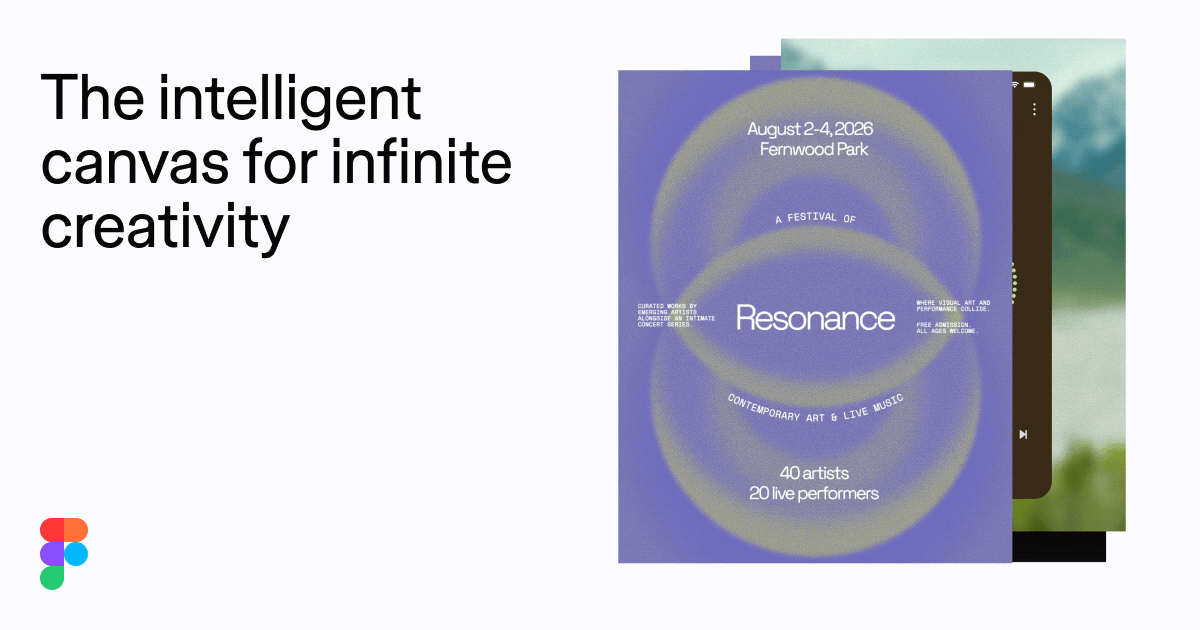
Figma is a collaborative web application for interface design that Semrush credits with 112.98M visits in October 2026. That makes it the third largest site in our database, behind DeepL at 157.75M and just ahead of Notion at 110.22M, and the largest design tool we track by more than five times: the next design tool, Photopea, is 21.4M. It is the first design tool we have torn down, and it opens our tenth teardown vertical. The story is not a quiet bootstrap. Figma was founded in 2012, took six funding rounds to a $10 billion valuation by May 2021, nearly sold to Adobe for about $20 billion in 2022, watched the deal collapse in December 2023, and went public on the New York Stock Exchange in July 2025. The homepage now sells it as "the collaborative canvas for design, code, and AI", and the pricing page sells seats, not files.
| Site | Figma, figma.com |
|---|---|
| What it is | Collaborative canvas for design, code, and AI: Figma Design, Figma Make, Figma Draw, Dev Mode, FigJam, Figma Slides, Figma Motion, Figma Specs, Figma Sites and Figma Buzz, built for interface design, prototyping and developer handoff |
| Who it is for | Designers, product teams and developers who design interfaces and prototypes together and hand them off to code, from solo professionals to enterprises |
| Category | Design tools |
| Monthly visits | 112.98M, Semrush, October 2026. Third-party estimate, not official MAU/DAU |
| Pricing | Starter free; Professional Full seat $16/month, Dev seat $12/month, Collab seat $3/month; Organization Full seat $55/month billed annually, Dev seat $25/month, Collab seat $5/month; Enterprise Full seat $90/month billed annually, Dev seat $35/month, Collab seat $5/month. Add-ons: AI credits and Governance+ (Enterprise only). Source: figma.com/pricing, checked 16 November 2026; prices in USD |
| Pricing model | Freemium subscription, priced per seat. Three seat types (Full, Dev, Collab) price the same person differently by what they do, and AI credits are metered on top of the seat price |
| Country breakdown | United States 19.9% (22.48M); India 12.52% (14.14M); Germany 4.99% (5.64M). Semrush, October 2026 |
| Operator | Figma, Inc., San Francisco. Founded in 2012 by Dylan Field and Evan Wallace. Source: Wikipedia, checked November 2026; the operator is not named on the Figma homepage or pricing page |
| Acquisition channels | Not publicly disclosed (see the acquisition section) |
TL;DR
- Figma draws an estimated 112.98M visits a month (Semrush, October 2026), the third largest site in our database and the first design tool we have torn down. The United States is 19.9% of that traffic, India second at 12.52% and Germany third at 4.99%, so the top three countries together are only 37.41%, a flatter spread than most large sites we track.
- The pricing is a seat ladder, not a feature ladder. Starter is free with unlimited drafts. Professional charges $16 a month for a Full seat, $12 for a Dev seat and $3 for a Collab seat. Organization is $55 a month billed annually for a Full seat, Enterprise $90. AI credits are a second meter on top: 500 a month on Starter, 3,000 on a Professional Full seat, 3,500 on Organization and 4,250 on Enterprise.
- It survived the deal that would have ended it as an independent company. Adobe agreed to buy Figma for about $20 billion in September 2022, and the deal was abandoned in December 2023 after regulators objected, with Adobe paying a $1 billion reverse breakup fee. Figma went public in July 2025 at a $56.3 billion first-day market value, and by June 2026 the share price had fallen below $20 with a market value under $10 billion. The traffic figure, by contrast, has not collapsed.
What problem does Figma solve, and for whom?
The homepage states the problem in one line: "The collaborative canvas for design, code, and AI". The longer version, from the founders' original objective quoted on Wikipedia, was to bring to design the collaborative capabilities Google Docs had introduced for text editing a decade earlier. Design files used to live on one designer's machine and travel by export. Figma put the file in the browser, let many people edit it at the same time, and rendered vector graphics with WebGL and WebAssembly so the browser could keep up. The audience the pricing page is built for is the whole product team, not just designers: a Full seat for the person who designs, a Dev seat for the person who turns the design into code, and a Collab seat for the person who comments, presents and organises.
The trust claim on the homepage is the site's own display, not a checked count, and it is quoted here with that label attached: 95% of the Fortune 500 uses Figma, based on data from March 2025. The traffic data fits a genuinely global product. A United States share of 19.9% is low next to peers in our database: Grammarly is 56.99% United States, Quillbot 28.82%, Notion 17.72%. India at 12.52% is the second country, which fits a tool whose users are working designers in every market, not just in the United States.
The second audience is the team that already designs in Figma and wants the canvas to do more. The homepage sells three jobs in that order: design anything, build with intention, and keep design context connected to the codebase so that what is designed is what gets shipped. The 2025 expansion added four product lines in one conference: Figma Sites, an AI website builder; Figma Make, an AI prototype and code generation tool; Figma Buzz, an AI marketing content creator; and Figma Draw, a richer vector illustration tool. That is a pitch to a team whose design files already live in Figma, and it is also the pricing story: the seat types and the AI credits are what the new products charge for.
The product and its first screen
The homepage we read on 16 November 2026 opens as "The full-stack creative canvas" and puts AI first, not files. The page then walks through the pitch: "Move fast in the right direction on an AI-native canvas. Teammates and AI agents work in the same space with shared context." Below that is the built-in creative collaborator, Figma's agent, which adds motion to designs, documents design systems and implements feedback. Then the workflow: "One workspace for your entire product development process", with "Design anything you can imagine" and "Build with intention", followed by "Powerfully expressive. Incredibly precise." and "Start with design context. Build with consistency. Your context, codebase, and agents stay connected so what you design is what gets shipped." The testimonial section, "The products you love are designed in Figma", quotes Francisco Seiz, Senior Design Director at Code and Theory: "Everyone is able to influence, inspire, and give input without ever leaving the design file." The 95% of the Fortune 500 figure follows, with the March 2025 data note. Those figures are Figma's own display.
The product underneath is ten surfaces on one canvas. The pricing page lists them: Figma Design, Figma Make, Figma Draw, Dev Mode, FigJam, Figma Slides, Figma Motion, Figma Specs, Figma Sites and Figma Buzz. Three modes organise the work: design mode for drawing shapes, frames and components; prototype mode for interactive flows between frames; and Dev Mode for inspecting elements, copying code snippets, downloading export assets and reading dimensions. Around that core sit the surfaces added year by year: Figma Community in October 2019, FigJam in April 2021, Dev Mode in June 2023, Figma Slides in June 2024, and the four Config 2025 launches in May 2025. In February 2026 Figma announced integrations with Anthropic's Claude Code and OpenAI's Codex through the Model Context Protocol, so engineers can iterate between design and code without leaving their tools. In October 2025 Figma acquired the Israeli AI startup Weavy for over $200 million and rebranded it Figma Weave. The history dates in this section come from Wikipedia, checked November 2026.
One detail on the pricing page matters more than the rest of the feature list. Figma Motion is in beta on Full seats only, and Figma Sites is in beta on Full seats only, while Figma Specs and Figma Buzz are in beta on all seats. The newest products are gated by seat type, not by plan, which is the same ladder the rest of the pricing uses. A Collab seat can watch the new products arrive without being able to use the two that matter most to a designer.
Pricing: four plans, three seats, and AI credits as the meter
The pricing page (figma.com/pricing, checked November 2026) lists four plans and three seat types, and the two axes multiply. Starter is free: unlimited drafts, UI kits and templates, 150 AI credits a day up to 500 a month. Professional charges a Full seat $16 a month, a Dev seat $12 a month and a Collab seat $3 a month, and adds unlimited files and projects, team-wide design libraries, advanced Dev Mode inspection and an MCP Server. Organization is billed annually: a Full seat $55 a month, a Dev seat $25 a month and a Collab seat $5 a month, and adds publishing resources across teams, shared libraries and fonts and centralised admin tools. Enterprise is billed annually: a Full seat $90 a month, a Dev seat $35 a month and a Collab seat $5 a month, and adds custom team workspaces, design system theming and APIs and SCIM seat management. The annual totals, $660 a year for an Organization Full seat and $1,080 a year for an Enterprise Full seat, are arithmetic from the monthly figures the page prints. The Professional plan shows no annual billing option on the page, so no annual total is printed for it.
Three details deserve attention. First, the seat is the unit, and the seat types price the same person differently by what they do. A Full seat gets full access to all ten products. A Dev seat gets full access to Dev Mode, FigJam, Slides, Buzz and Specs, plus view and comment access in Figma Design files. A Collab seat gets full access to FigJam, Slides, Buzz and Specs, plus view and comment access in Design files, with only basic inspection in Dev Mode. A viewer on a paid plan can view and comment without buying a seat at all. The ladder is who you are on the team, not how many files you make. Second, AI credits are a second meter. Every seat includes a monthly allotment: 500 a month on Starter and on every Collab and Dev seat, 3,000 on a Professional Full seat, 3,500 on Organization and 4,250 on Enterprise. Extra credits can be bought as an add-on, pay-as-you-go or by subscription. The free tier gets 150 credits a day, capped at 500 a month, which is enough to try the agent and not enough to live on it. Third, the price gaps are wide on purpose. A Collab seat at $3 is about a fifth of a Full seat at $16 on Professional. An Organization Full seat at $55 is about 3.4 times a Professional Full seat. An Enterprise Full seat at $90 is about 1.6 times Organization. Each step up buys admin control and security, not more canvas.
What the money buys, beyond the caps, is the removal of the limits that bite in the middle of real work. A free user hits the wall at AI credits and at the missing team libraries. A Professional buyer gets unlimited files and the libraries. An Organization buyer gets the shared fonts and the centralised admin. An Enterprise buyer gets SCIM seat management and the Governance+ add-on for security and compliance. What we cannot see from outside is how much revenue comes from Full seats versus Dev and Collab seats, or how many free users convert. A teardown that invented those numbers would read better and be worth less. The pricing page lists no free trial of a paid plan, and no refund terms are printed on it.
How does Figma get its users?
Not publicly disclosed. Figma publishes no acquisition mix, and our database holds no verified channel data for it, so this section is short on purpose. Anyone who tells you Figma's traffic is exactly X percent organic search is guessing, however plausible the guess sounds.
Four things are observable without inventing numbers. First, the Community is itself a distribution channel. Figma Community launched in October 2019, letting designers publish their work for others to view and adapt, and the homepage still leads visitors to community resources and UI kits. Every template is a page that can rank for the exact design somebody is looking for. Second, the free tier is the distribution. A workspace that works without paying, and that holds a person's design files, demonstrates itself in the user's own work, and the file itself carries the product to everyone invited into it. Third, education is distribution. Google for Education announced in June 2022 that it would bring Figma and FigJam to education Chromebooks, and the pricing page offers a discount for schools and classrooms. Fourth, the bottom-up route is visible in the homepage's own claim: 95% of the Fortune 500 uses Figma. A tool that starts with one designer in a company and spreads to the team is the same motion, whether or not the percentage is exact.
From visit to payment: what the pricing page proves
The conversion story we can defend from public evidence is about three visible walls. The first is the file and library wall. Starter gives unlimited drafts but no team-wide design libraries and no unlimited files and projects for a team, so the moment a design system needs to be shared, the free plan starts running out. The second wall is the seat wall. A Dev seat at $12 and a Collab seat at $3 are cheap, but only a Full seat at $16 can design, and only a Full seat gets the Motion and Sites betas. The third wall is AI credits. A free user gets 150 credits a day up to 500 a month, a Professional Full seat gets 3,000, and extra credits are a paid add-on. Each wall is hit in the middle of real work, which is when a buyer is most likely to pay.
The seat model does different work from the walls. Every new designer is a new Full seat, every developer a Dev seat, every stakeholder a Collab seat, so a team that grows from five people to fifty multiplies what it pays without any change in the plan. That is why the Organization plan, at $55 a month billed annually for a Full seat, is the plan the pricing page pushes toward for a business: it is where the shared libraries and the centralised admin live, and it is where a growing team lands. The education discount does the opposite job. A discount for schools and classrooms puts the product in people who will carry it into their first job. What we cannot see from outside is the free-to-paid conversion rate, the share of revenue that comes from Enterprise, or how many signups come from the Community versus education versus the homepage.
Retention: what keeps people coming back?
Not publicly disclosed. Figma publishes no churn, renewal or cohort figures in the sources we checked. The structural point is still worth making, because it is the bet the whole category rests on: a design file is not a document, it is a system of record, and a system of record that already holds the team's design system is hard to move.
Three features of the product support return visits more directly than the daily habit does. The first is the design system. Components, variables and libraries built in Figma only exist inside Figma, and switching means rebuilding them. The second is the multiplayer file. A file that several people edit at the same time, with comments and cursors in it, is a meeting room as much as a document, and leaving means moving the meeting. The third is the surrounding surface: Dev Mode, Slides, Sites, Make and the MCP integrations each add a reason to stay, because each one wires Figma deeper into the rest of the organisation. The counterweight is the 2025 expansion itself. A tool that adds four product lines in one conference can spread itself thin, and the February 2026 integrations with Claude Code and Codex show that the AI coding tools are now building design features of their own. Whether that plays out as Professional renewals, Organization expansion, or Enterprise consolidation, we cannot tell from public data.
Why Figma is still standing
Our read, stated as a position you can argue with: Figma survives because it was the file, not the feature. The company was founded in 2012 by Dylan Field and Evan Wallace, who set out to bring Google Docs-style collaboration to design, and shipped the first public release on September 27, 2016 after an invite-only preview in December 2015. The product that came out of that build was one canvas that many people could edit at once, rendered in the browser with WebGL and WebAssembly, and every surface since, Community, FigJam, Dev Mode, Slides, Sites, Make, Draw and Buzz, is the same canvas with a new job. The price is the proof of the positioning. Four plans, three seats, and a free tier that is unlimited for drafts and limited for teams: the product does not need a ladder of features because the seat is the ladder.
The second half of the argument is the traffic figure, with its label attached. An estimated 112.98M visits in a single month (Semrush, October 2026) is the third largest figure we track, just over a third of iLovePDF at 303.35M and just ahead of Notion at 110.22M. The country mix is the honest measure of how far the product has spread: the United States is only 19.9%, and India and Germany together are 17.51%. The funding tells the other half. Figma raised $3.8 million in seed funding in June 2013, $14 million in Series A in December 2015, $25 million in Series B in February 2018, $40 million in Series C in February 2019, $50 million in Series D in April 2020 and $200 million in Series E in June 2021, reaching a valuation of more than $2 billion in April 2020 and $10 billion by May 2021. A press-reported revenue figure, US$1.06 billion in 2025 with an operating loss of US$1.29 billion, is quoted here from Wikipedia with that label attached, not as an official disclosure. Figma is not bootstrapped, and the teardown does not pretend otherwise. It survived because the file became the place the team works, not because it never took money.
The last part of the argument is the deal that did not happen. Adobe agreed in September 2022 to buy Figma for about $20 billion in cash and stock. The design community objected, regulators in the United States and Europe opened reviews, and on December 18, 2023 both companies mutually agreed to abandon the merger, with Adobe paying a $1 billion reverse breakup fee. Figma then went public on July 31, 2025, with shares opening at $85 and closing the day with a market value of $56.3 billion, and by June 2026 the share price had fallen below $20 with a market value under $10 billion. A company that survives a failed $20 billion acquisition and a public listing that loses four fifths of its first-day value, while the product keeps the third largest traffic figure in our database, is a company whose survival does not depend on its share price.
What you can copy, and what you cannot
Copyable this week
- Price by the seat, not by the feature. Figma charges per person and prices the same person differently by what they do, so the bill grows with the team that uses the product. When the scarce resource is people, the ladder should be people.
- Make the free tier unlimited for drafts and limited for teams. A solo designer who can build real work for free will bring the team, and the team is where the free plan runs out.
- Grow sideways from the same canvas. Community, FigJam, Dev Mode, Slides, Sites, Make, Draw and Buzz are all the same file with a new job, so every new surface makes the old one harder to leave.
- Put the new capability at the top of the ladder, not in the middle. Figma Motion and Figma Sites in beta on Full seats only is the new product gated by the seat that already pays the most.
- Give schools the product and let students carry it into work. An education discount and a Chromebook partnership are distribution into the next generation of teams.
Not copyable
- Thirteen years of files and community. A library of workspaces built by 13 million users and a Community running since 2019 is a decade of somebody else's use cases, and every template is a search result a new tool does not have.
- The failed acquisition. A company that was nearly bought for $20 billion, kept its independence, collected a $1 billion breakup fee and then went public has a story a new tool cannot claim on day one.
- The global spread. A United States share of 19.9% with India at 12.52% and Germany at 4.99% is years of compounding in markets a new tool has not entered.
Risks and gaps in this teardown
- The traffic figure comes from a single source for the month quoted, Semrush, and is a third-party estimate. Figma publishes no official MAU or DAU.
- "95% of the Fortune 500 uses Figma", based on data from March 2025, and "The products you love are designed in Figma" are Figma's own claims, printed by Figma on its homepage. They are quoted as the site's own figures, not as independently verified data.
- The revenue figure, US$1.06 billion in 2025 with an operating loss of US$1.29 billion and a net loss of US$1.25 billion, and the user count of 13 million as of 2025, come from Wikipedia, checked November 2026. They are not official disclosures by Figma quoted here as such.
- The history dates (founded 2012, invite-only preview December 3, 2015, first public release September 27, 2016, funding rounds June 2013 to June 2021, valuations of more than $2 billion in April 2020 and $10 billion in May 2021, Figma Community October 22, 2019, FigJam April 21, 2021, Dev Mode June 2023, Figma Slides June 2024, Adobe agreement September 15, 2022 and abandonment December 18, 2023 with a $1 billion reverse breakup fee, Config 2025 launches May 7, 2025, IPO filing July 1, 2025 and listing July 31, 2025 with shares opening at $85 and a $56.3 billion first-day market value, share price below $20 with a market value under $10 billion in June 2026, Weavy acquisition October 2025 for over $200 million, Claude Code and Codex integrations February 2026) come from Wikipedia, checked November 2026. The operator is not named on the Figma homepage or pricing page.
- Prices were checked on the Figma pricing page on 16 November 2026, in USD. The Professional plan shows no annual billing option on the page, so no annual total is printed for it. Annual totals ($660 a year for an Organization Full seat, $1,080 a year for an Enterprise Full seat) are arithmetic from the monthly figures the page prints, and are labelled as such.
- Figma Motion is in beta on Full seats only and Figma Sites is in beta on Full seats only. Both are labelled beta on the pricing page, so their availability may change.
- Acquisition mix, conversion rates and retention are not publicly disclosed. Sections above say so rather than estimating them.
- Country breakdown comes from Semrush for October 2026 and covers the top three countries only. The remaining share is not broken out in the sources we checked.
Similar sites in the database
Figma is the largest design tool in the database by more than five times, so the nearest same-category peers are all far smaller. The nearest peers by model are free-first design tools that also sell a paid plan.
| Site | Category | Monthly visits | Source |
|---|---|---|---|
| Photopea | Design tools | 21.4M | Semrush, Feb 2026 |
| Magma | Design tools | 5.38M | Semrush, Oct 2026 |
| Coolors | Design tools | 4.9M | Semrush, Oct 2026 |
Compare Figma with Photopea and Magma side by side. The full database, with working filters, is on the teardowns index.
Read the next one in your inbox
This teardown is free to read. The new ones go out by email first, one a week, with the traffic source and month attached to every number. Leave your address and the next one comes to you.