
How Seed Health turns $49.99 a month into profit
Monthly visits
1.72M
October 2026. Third-party estimate, not official MAU/DAU. Semrush counted 1.72M for the month, up 1.23% on September (1.69M).
Seed Health draws an estimated 1.72M visits a month (October 2026, Semrush), up 1.23% on September. It is the 249th-largest site in our database of 920, just behind GetResponse at 1.74M and ahead of Removal.AI at 1.71M.
| Site | Seed Health, seed.com |
|---|---|
| What it is | A probiotics and supplements subscription DTC brand: DS-01 daily synbiotic, DM-02 multivitamin and a growing shelf of targeted formulas |
| Who it is for | People who subscribe for gut and whole-body health |
| Category | Health & wellness · DTC subscription |
| Monthly visits | 1.72M, October 2026. Third-party estimate, not official MAU/DAU; Semrush, up 1.23% on September (1.69M) |
| Founded | 2016, by Ara Katz and Raja Dhir, in Venice, California; the company was registered in December 2015 and its first product launched in 2018 |
| Headquarters | Venice, California (2100 Abbot Kinney Blvd, Venice, CA 90291) |
| Operator | Seed Health, Inc., privately held; Series A $40M in April 2021, led by The Craftory |
| Survival engine | Repeat buying, led by direct traffic. The $49.99-a-month DS-01 subscription renews every four weeks; the Welcome Kit, InnerCircle points and the $67.50 Duo bundle raise the monthly bill and pull cash forward, while clinical trials and a science board justify a price two to three times the drugstore shelf — and Target, Amazon and Costco turn that trust into walk-in sales |
| Pricing | DS-01 $49.99/mo; DM-02 $39.99/mo; Daily Essentials Duo $67.50/mo (was $89.98); PDS-08 $39.99/mo; VS-01 $39.99/mo after a $99 two-month starter kit. A 30-day supply delivered every 4 weeks; pause or reschedule anytime; cancel in the account. Source: seed.com product pages, read 26 November 2026 (the screenshots show Black Friday prices — 30% off — not the list prices in this row) |
| Pricing model | Subscription only; no free plan, no trial — a 30-day money-back guarantee on the first order only; Black Friday 30% off sitewide (seasonal, ends 30 November 2026) |
| Typical basket (derived) | Derived from listed prices and bundle structure (November 2026): a typical paying subscriber spends $49.99–$67.50 a month — DS-01 alone at the low end, the Daily Essentials Duo at the high end ($810 a year). Seed Health does not disclose real average order value, so this is a derivation, not a company figure |
| Free hook | 25% off DS-01 with the quiz; Black Friday 30% off sitewide plus a free Cadence Medium Capsule; Welcome Kit with the first order; 30-day money-back guarantee on the first order |
| Meta ads | Reported in the United States — third-party ad libraries list Seed Health DS-01 ads in the Meta Ad Library (oneirosea.com counted 89 live ads on 18 November 2026; eva.guru cites Library ID 4482210852097204). A direct keyword search on 26 November 2026 returned about 19,000 matches, mostly unrelated advertisers, and did not surface Seed Health’s own ads on the first screen — no exact own-ad count is published here |
| Country breakdown | United States 92.33% (1.58M); Canada 2.57% (44.09K); India 0.58% (10.03K) (Semrush, October 2026) |
| Audience | Not verified — Similarweb’s public page showed “No Data to Display” for age and gender on 26 November 2026 (free search limit reached, not zero traffic) |
TL;DR
- Seed Health sells the refill, not the first jar. DS-01 costs $49.99 a month, delivered every four weeks, and the subscription is the only way to buy it — no free plan, no trial, just a 30-day money-back guarantee on the first order. The Duo bundle at $67.50 and prepaid 3- and 6-month plans pull the money forward.
- The company says it is profitable. US Chamber reported in August 2025 that it was turning a profit after revenue grew more than 500% in three years, and a November 2026 release claims revenue up 13 times in five years while remaining profitable. No audited accounts are published.
- The traffic is brand-led: the word “seed” alone is 90,500 searches a month, 47.66% of organic traffic. But the review split is the warning: 4.8 out of 5 on the company’s own site against 2.5 out of 5 on Trustpilot, where the complaints are about cancellations and repeat charges.
The refill is the business
The homepage sells seven days, not a price
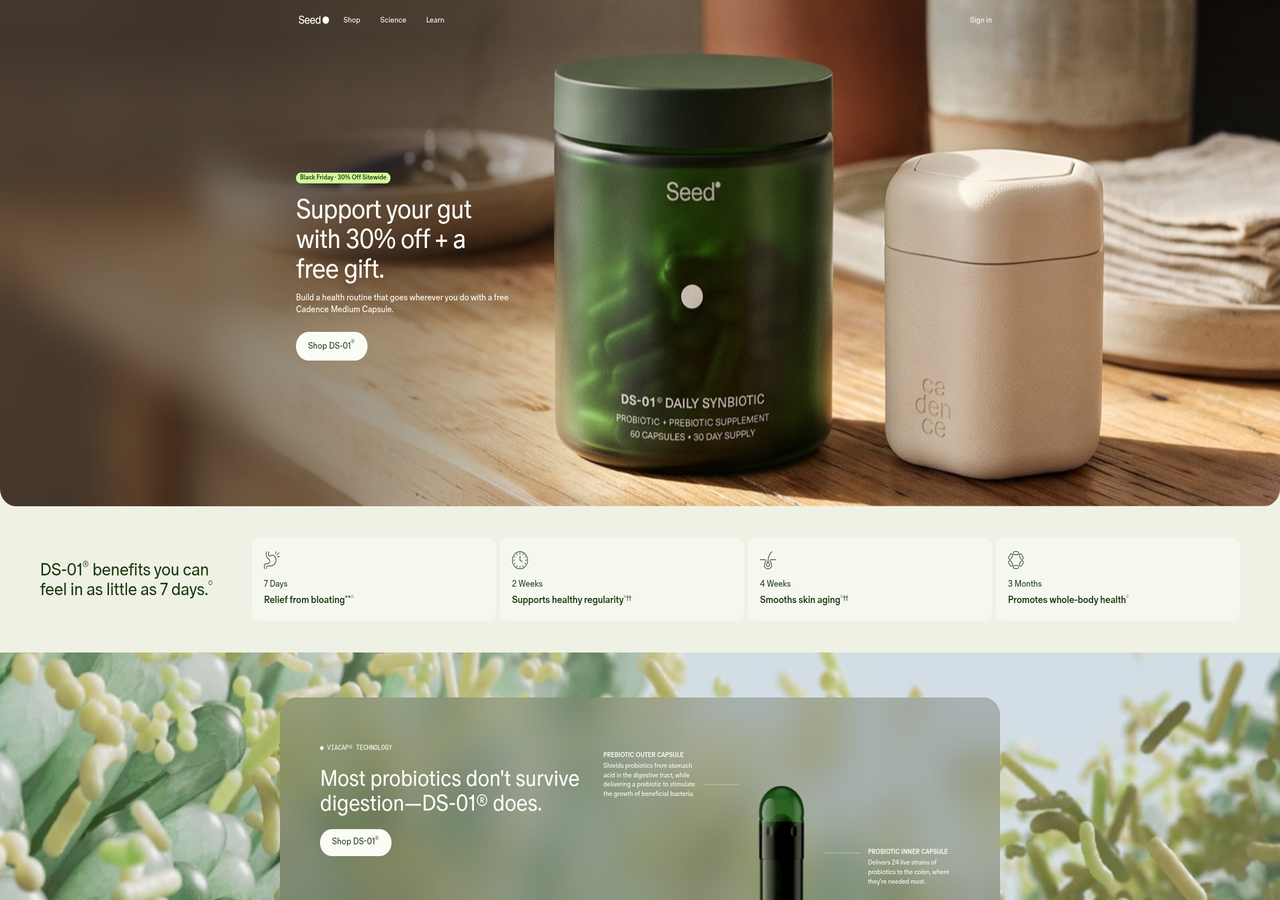
Screenshot of the seed.com homepage, read 26 November 2026. The hero is a promise — “Support your gut with 30% off + a free gift.” — over a photograph of the green DS-01 jar and its travel capsule, with a Black Friday banner offering 30% off sitewide.
The first thing a visitor meets is a promise, not a price. The hero reads “Support your gut with 30% off + a free gift”, over a photograph of the green DS-01 jar and its travel capsule. Below it, four boxes make the timeline concrete: relief from bloating in 7 days, healthy regularity in 2 weeks, smoother skin ageing in 4 weeks, whole-body health in 3 months.
The price waits for the product page. The homepage carries no dollar figure except the discount — 30% off sitewide for Black Friday, with a free Cadence Medium Capsule. The call to action is “Shop DS-01”, and the page’s own numbers are the company’s claims, not verified figures: over 1 million health transformations, 38 trillion microorganisms in the “You are more than human” section, 24 strains in every capsule.
The science is the pitch. A section headed “Most probiotics don’t survive digestion — DS-01 does” explains the ViaCap capsule-in-capsule: a prebiotic outer capsule that shields the probiotics from stomach acid, and a probiotic inner capsule that delivers 24 live strains to the colon. The technology is the reason the price can be three times the drugstore shelf.
Search is the brand name itself
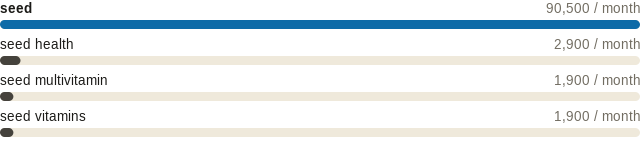
Semrush, October 2026 — monthly search volumes (last updated 11 November 2026).
Search is the brand talking about itself, literally. The top organic keyword is “seed” itself, at 90,500 searches a month and rank 1, worth 47.66% of organic traffic. The next three are “seed health” at 2,900, “seed multivitamin” at 1,900 and “seed vitamins” at 1,900, all at rank 1. The whole top list is the brand name in different spellings.
That concentration is the moat and the risk in one number. Nearly half of organic traffic arrives on a single generic word that the company happens to own — a word that also means every other kind of seed. The defence is the product: the searchers who type “seed” are looking for the green jar, not gardening.
The search trend underneath is less comfortable. Organic search fell 11.56% in October and paid search fell 66.64%, while total visits still rose 1.23%. The growth is not coming from search at all — it is coming from people typing the address directly, at 42.62% of visits.
Ten years from a jar to a shelf
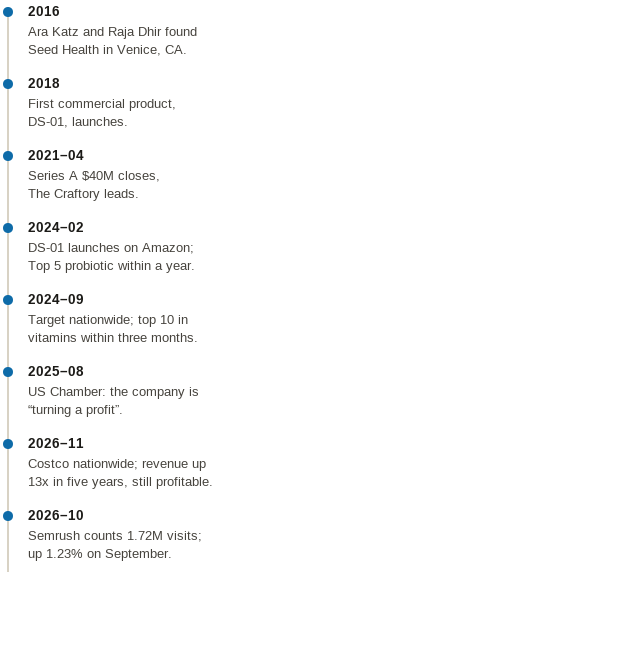
Company history; US Chamber founder interview (2025), PR Newswire (2021), Fitt Insider (2026); Semrush, October 2026. Profit is company-claimed, not audited.
Ara Katz and Raja Dhir founded Seed Health in Venice, California in 2016 — the company was registered in December 2015 — and the first commercial product, DS-01, launched in 2018. A $40M Series A followed in April 2021, led by The Craftory, and in February that year the company bought Auggi Technologies, an AI digestive-health tracker, to build a consumer product on stool data.
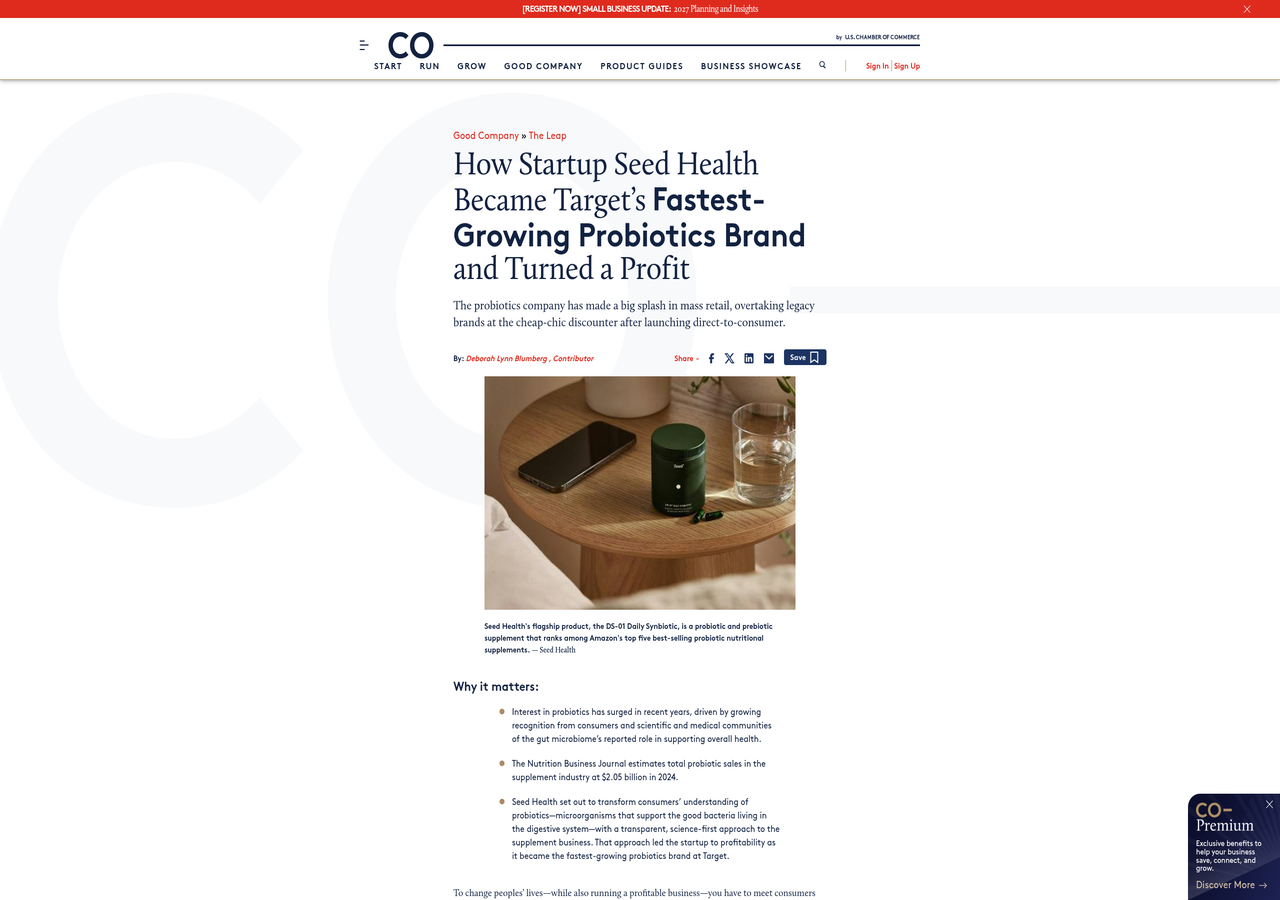
US Chamber article, 7 August 2025. The headline itself carries the profitability claim: the company became Target’s fastest-growing probiotics brand “and turned a profit”.
The retail expansion is the second act. DS-01 launched on Amazon in February 2024 and reached the top five probiotics within a year; Target took it nationwide in September 2024, and it reached the top ten in vitamins within three months. Sprouts and Erewhon followed, and Costco took it nationwide on 9 November 2026 with a 100-count exclusive pack at $74.99.
The profitability claim comes from the founders themselves, not from audited accounts. US Chamber reported in August 2025 that the company was turning a profit after revenue grew more than 500% in three years, and a November 2026 release claims revenue up 13 times in five years while remaining profitable, with more than 2 million users. No profit figure, margin or audited revenue has ever been published.

Wayback Machine snapshot of seed.com, 3 November 2017. The pre-launch teaser sold the microbiome, not a product — “You’re only 50% human” — over an email box, signed “Sprouting 2018”.
The archive shows the company before it had a product. The earliest Wayback capture of seed.com is a 184-byte placeholder from 28 November 1999, from before the domain belonged to the company. The first substantial capture of the Seed Health site dates to 3 November 2017, and it renders a pre-launch teaser: dark green, “You’re only 50% human”, an email box and the sign-off “Sprouting 2018”. The pitch was the microbiome itself, a year before DS-01 went on sale.
The price list: the subscription is the wall
Five products, one bill
| Plan | Monthly | What it buys |
|---|---|---|
| DS-01 Daily Synbiotic | $49.99 | 24-strain synbiotic, 30-day supply every 4 weeks; Welcome Kit with the first order |
| DM-02 Daily Multivitamin | $39.99 | Daily multivitamin, 30-day supply every 4 weeks |
| Daily Essentials Duo | $67.50 | DS-01 + DM-02 bundled, was $89.98, save $22.48 (about 25% off) |
| PDS-08 Pediatric Synbiotic | $39.99 | Daily synbiotic for ages 3–17, 30-day supply every 4 weeks |
| VS-01 Vaginal Synbiotic | $39.99 | After a $99 two-month starter kit; then $39.99 a month |
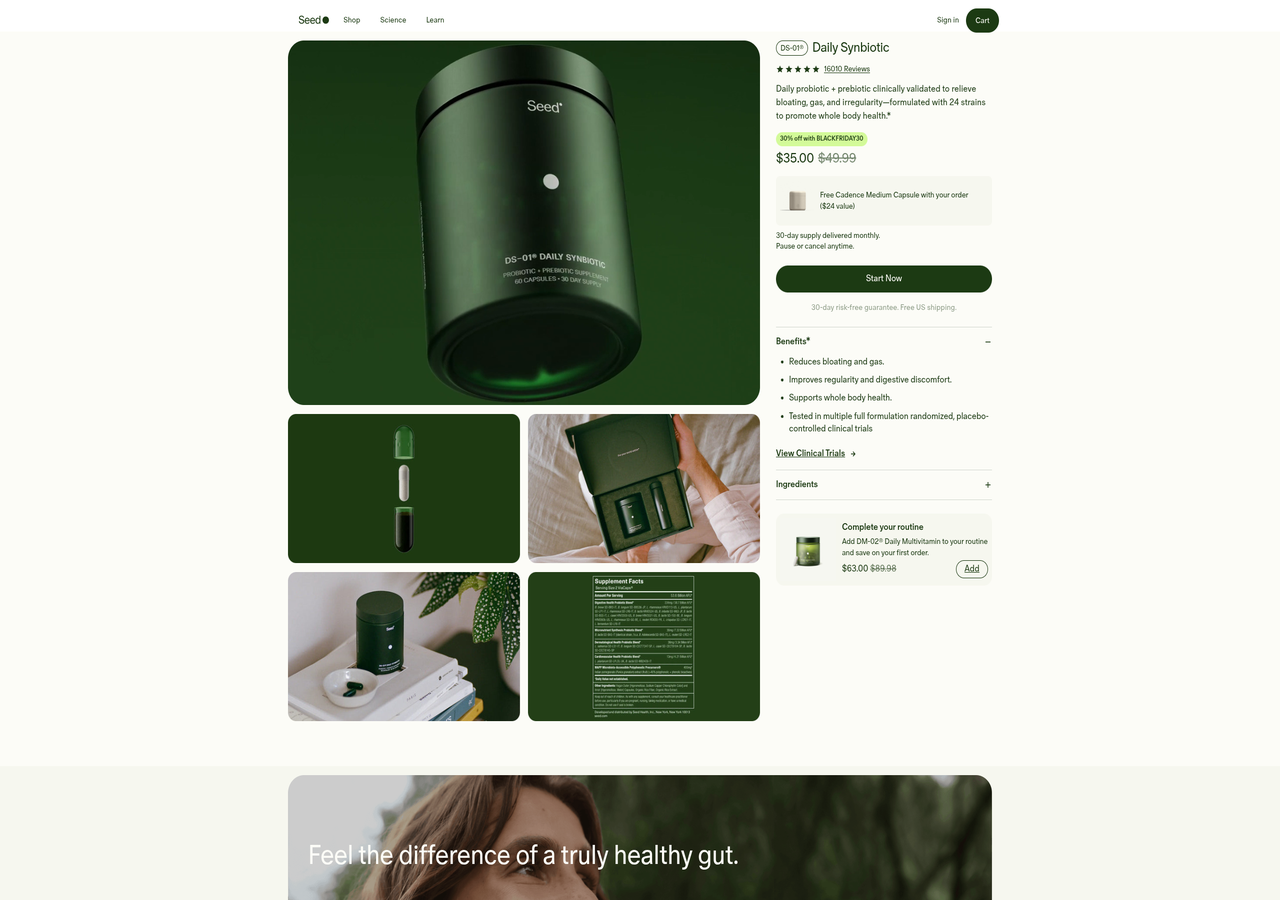
Screenshot of the DS-01 product page, read 26 November 2026. The page shows the Black Friday price — $35.00 struck through from $49.99 — with “30-day supply delivered monthly. Pause or cancel anytime.” and a Start Now button.
There is no way to buy DS-01 once. The product page answers its own question — “Do I have to sign up for a subscription? Yes.” — and the subscription is the only door: $49.99 a month, delivered every four weeks, with the first order arriving as a Welcome Kit of a reusable glass jar, a travel vial and reading material. A one-time purchase at $64.99 is quoted by third-party coupon sites, not by the company, and is not treated here as a list price.
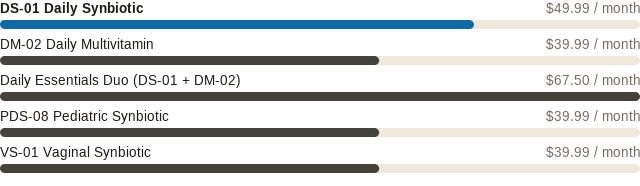
Listed prices, November 2026. VS-01 is $39.99 a month after a $99 two-month starter kit.
The screenshot shows the seasonal price, not the list price. On 26 November the page showed $35.00 struck through from $49.99 — 30% off with the code BLACKFRIDAY30 — plus a free Cadence Medium Capsule worth $24, a 30-day risk-free guarantee and free US shipping. The list price is $49.99, and the seasonal prices in this section will be re-checked after 30 November.
The range is narrow and the anchor is DS-01. DM-02 and PDS-08 both sit at $39.99 a month, VS-01 follows at $39.99 after its $99 starter kit, and the Duo bundle at $67.50 is the only step up — $22.48 off the $89.98 combined price. Three- and six-month prepay plans cut roughly 10% and 15%, on third-party coupon-site figures the company does not publish itself.
The guarantee is the trial. There is no free plan and no trial size: the 30-day money-back guarantee covers the first order only, refunding the product price minus shipping, and later orders are final sale 30 days after delivery. Cancellation is self-serve in the account, but the terms ask for at least three business days’ notice, and orders already processed cannot be changed.
Three months, one source

Semrush, August to October 2026. Third-party estimates, not official MAU/DAU.
October’s 1.72M is a Semrush figure, up 1.23% on September’s 1.69M and well above August’s 1.18M — three months from one source is a direction, not a trend. The average session lasts 7 minutes 18 seconds, and the site ranks 31,114th globally and 10,018th in the United States. The public Semrush page did not show pages per visit, bounce rate or an authority score this round.
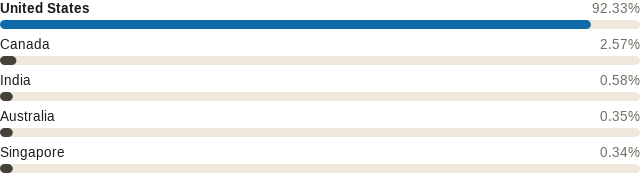
Semrush, October 2026. Third-party estimates, not official MAU/DAU.
The audience is American first and almost only. The United States is 92.33% of visits, Canada 2.57% and India 0.58%, with Australia and Singapore under half a percent each. Mobile is 69.79% of US visits. The audience split is not verifiable this round: Similarweb’s public page showed “No Data to Display” for age and gender on 26 November 2026, behind a free-search limit wall.
The one number that matters for the model is the direct share. Direct visits are 42.62% of traffic and google.com is 5.06% — the rest of the journey was not shown on the public page. A subscription business that gets two visits in five straight to its own address is not hunting for customers. It is collecting them.
What keeps buyers coming back
| Mechanism | Status | What we found |
|---|---|---|
| Skip a delivery | ✓ | Skip or reschedule the next refill in the account, up to the day before processing (help.seed.com) |
| Pause | — | No indefinite pause, only a skipped delivery (help.seed.com) |
| Cancel | ✓ | Self-serve cancellation in the account; terms ask for 3 business days’ notice (help.seed.com) |
| Free shipping | ✓ | Free standard US shipping; $10 flat for international orders (third-party coupon sites; not stated on the product page) |
| Gift subscription | Not verified | Gift cards exist in the terms; no standalone gift subscription product found |
| Loyalty programme | ✓ | InnerCircle: 1 point per $1, redeemable for product or $25 credit; points expire 90 days after all subscriptions end |
| First-order hook | ✓ | Quiz 25% off DS-01; Black Friday 30% off plus a free gift; Welcome Kit |
| Referral | ✓ | Friend gets $25 off the first order, referrer gets 500 points (help.seed.com) |
| Prepay lock-in | ✓ | 3-month prepay about 10% off, 6-month about 15% off (third-party coupon sites) |
| Money-back guarantee | ✓ | 30 days, first order only (DS-01 product page FAQ) |
Retention is the refill, not the renewal date. Nothing expires, but the bill arrives every four weeks, and the customer stays because leaving means losing the jar, the points and the routine at once. Skipping and rescheduling are self-serve up to the day before processing; there is no indefinite pause, only a skipped delivery. The loyalty scheme pays one point per dollar, redeemable for product or $25 of credit, and the points die 90 days after every subscription is cancelled.
| Channel | Share of visits | Platform & stack |
|---|---|---|
| Direct | 42.62% of visits | Semrush, Oct 2026 (traffic journey) |
| Organic search | Down 11.56% in October | Semrush, Oct 2026 (no absolute figure shown) |
| Paid search | Down 66.64% in October | Semrush, Oct 2026 (no absolute figure shown) |
| google.com | 5.06% of visits | Semrush, Oct 2026 (traffic journey) |
| AI referrals | ChatGPT 732 visits, Claude 87 visits | Semrush AI Traffic, Oct 2026 |
| Meta ads | Reported active in the United States; direct keyword search did not surface own ads | Meta Ad Library + third-party libraries, 26 Nov 2026 (see data card) |
| Affiliate | Present — impact.com tracking on the VS-01 page | VS-01 product page URL parameters |
| Not verified — no outbound email marketing found this round | Not verified |

Semrush, October 2026. Traffic journey shares; third-party estimates, not official MAU/DAU.
The channels are direct first and search second, and both are the brand, not the category. Direct visits are the subscribers coming back for their refill, and the search that does arrive is the brand name itself. Email is the gap: the company sells subscriptions but no outbound campaign of its own could be found this round, so the repeat buyer is reached by the product and the points, not by a campaign.
| Area | What we found |
|---|---|
| Platform | Not verified — the traffic journey shows visits to shopify.com after seed.com, which suggests Shopify, but no platform fingerprint was confirmed on the page |
| Subscription management | Seed Account: skip, reschedule, cancel and reactivate in the account (help.seed.com) |
| Payments | Not verified — third-party coupon sites list cards, PayPal and Amazon Pay |
| Not verified — no email provider found this round | |
| Analytics | Google Analytics, Google Marketing Platform, DoubleClick, Instagram (Similarweb technology read, July 2026) |
| API | Not verified — no public API verified this round |
| Reviews | Trustpilot 2.5/5 (306 reviews); DS-01 on seed.com 4.8/5 (16,007 reviews, on-site) |
The stack is mostly the company’s own account system plus the tools it rents. The subscriptions run on the Seed Account, the analytics fingerprint is Google’s, and the delivery story is the product itself — a capsule inside a capsule, made to survive the stomach. The one piece Seed Health owns outright is the refill: the jar, the points and the four-week rhythm.
| Site | Entry price | What the comparison shows |
|---|---|---|
| Seed Health | $49.99/mo (DS-01) | Subscription only; clinical trials; Target, Amazon, Costco |
| AG1 | $69/mo | Greens powder subscription; the most expensive entry in the set |
| Ritual | $37.50/bottle | Women’s multivitamin subscription; the cheapest entry here |
| O Positiv | $29.99/mo (FLO) | Women’s health subscription; the lowest monthly subscription price |
| Cymbiotika | $62.00/box | Liposomal vitamin C, on sale at $41.85; single-box pricing |
| Legion Athletics | $48.99 (Whey+) | Sports nutrition subscription; the closest price to DS-01 |
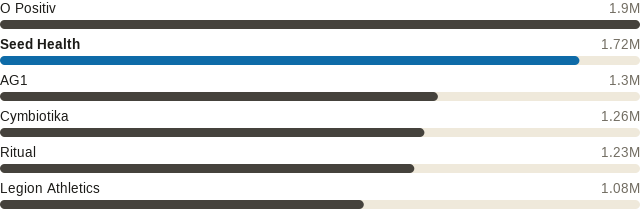
Monthly visits, Semrush, October 2026. Third-party estimates, not official MAU/DAU.

Trustpilot, November 2026 (306 reviews); DS-01 rating is the site’s own on-site score (16,007 reviews), not a third-party score. Small third-party sample — the score is a signal, not a verdict.
The rivals set the price band, not the ceiling. Ritual starts at $37.50 a bottle and O Positiv’s FLO at $29.99 a month on subscription, while AG1 starts at $69 — Seed Health’s $49.99 sits in the upper middle, and its 1.72M visits lead AG1, Ritual, Cymbiotika and Legion, trailing only O Positiv at 1.9M. The premium is not the capsule: every rival sells a capsule. The premium is the trial data and the retail shelf.
Three things should not be quoted as facts. No profit figure has ever been published, so “profitable” is the company’s own word, carried by a US Chamber interview and a company release — not by accounts. The revenue is not published either, so a $56M figure on an AI-generated aggregator page is not used here. And the review scores are split: the company’s own page shows 4.8 out of 5 from 16,007 reviews, while Trustpilot shows 2.5 from 306, mostly about cancellations and repeat charges.
The open question is whether the refill can keep its price. The subscription is the wall, the trial data is the justification, and the retail shelf is the proof — but the cheapest price for the most loyal buyer is now at Costco, not on seed.com, and the customers who complain loudest are the ones who tried to leave. The defence is the part that cannot be copied cheaply: eight years of refills, a clinical trial in a peer-reviewed journal, and a jar that arrives every four weeks.
Seed Health is the first health and wellness DTC subscription in the collection with a full teardown, in the Health & wellness · DTC subscriptions collection. Seed Health against its closest matches: compare Seed Health with AG1 and Ritual side by side. The closest pattern matches among published teardowns are O Positiv and Flo — one sells women’s health supplements from $29.99 a month on subscription, the other is the 4.65M women’s health subscription.
The full teardown is for members
The full analysis of pricing, acquisition, conversion and retention is member content. Membership is $29 a month or $249 a year.
Similar sites in the database
Seed Health (1.72M) sits between GetResponse (1.74M) and Removal.AI (1.71M) in the database.
| Site | Category | Monthly visits | Source |
|---|---|---|---|
| Bouqs | Flowers · Flower delivery & subscription | 1.78M | Semrush, Oct 2026 |
| CALPAK | Travel gear · Luggage DTC brands | 1.75M | Semrush, Oct 2026 |
| GetResponse | Email marketing | 1.74M | Semrush, Oct 2026 |
| Seed Health | Health & wellness · DTC subscription | 1.72M | Semrush, Oct 2026 |
| Removal.AI | Image tools · AI background removal | 1.71M | Semrush, Oct 2026 |
| Cotopaxi | Outdoor · Outdoor gear DTC brand | 1.71M | Semrush, Oct 2026 |
Compare Seed Health with AG1 and Ritual side by side. The full database, with working filters, is on the teardowns index.
Read the next one in your inbox
The new ones go out by email first, one a week, with the traffic source and month attached to every number. Leave your address and the next one comes to you.